
New Zealand is surrounded by the sea on all sides and is home to a wide variety of clean rivers and lakes, making it widely recognised as a paradise for fishing. With abundant marine life and easy access to both freshwater and saltwater fishing spots, it is a popular destination for anglers from around the world. Similarly, Japan—also an island nation—has a long history of living closely with the sea, where fishing in oceans, rivers, and lakes has been one of the most popular outdoor activities for centuries.
In such an environment, Japan has developed several types of knives specifically designed for preparing fish. In this article, we will introduce one of them: the deba knife.
Fish Culture in Japan and the Deba Knife
In Japan, fish has long been at the heart of the food culture, and before supermarkets became widespread, it was common for people to prepare whole fish themselves. For this reason, the deba knife has long been used as a traditional knife for processing fish. Even today, it is widely used not only in restaurants and by fishing enthusiasts, but also in households when preparing fish.
One of the most representative methods of fish preparation is called “sanmai oroshi” (filleting into three pieces) . This is a traditional Japanese filleting technique in which a fish is divided into three parts: two fillets and the central backbone.
Please click here to see how to fillet fish using the sanmai oroshi method. The video shows a small fish, but the basic steps are the same.
Features of a Deba Knife
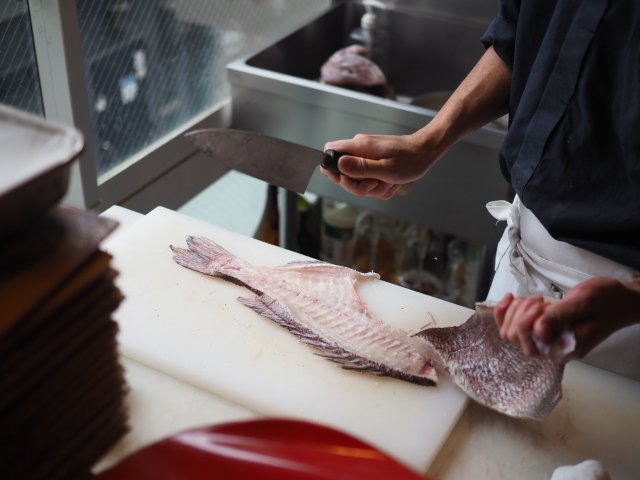
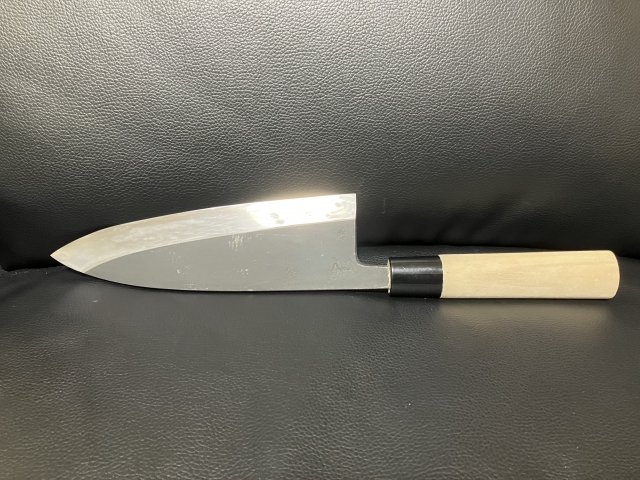
A deba knife is a type of traditional Japanese single-bevel kitchen knife. It has a thick, heavy single-bevel blade to prevent chipping when cutting fish heads and bones. The blade is also wide and sturdy, making it especially suitable for breaking down whole fish with bones.
Deba knives come in a range of blade lengths, and the ideal size varies depending on the type of fish being prepared. For home use, a blade length of around 150 mm is most common.
As a general guide:
- Small fish: 90–135 mm (ko-deba / small deba)
- General home cooking: 150–165 mm (standard deba)
- Large fish / professional use: 180 mm and above
Deba Knives Have a Single-Bevel Blade
A deba knife is a single-bevel knife, meaning that only one side of the blade is sharpened.
This design allows the blade to move smoothly along the fish bones. As a result, it can follow the natural shape of the bones and cut the flesh cleanly without removing unnecessary meat.
This makes it easier to separate the fillet neatly, resulting in a clean and precise finish.
What is the difference from Sashimi Knife?
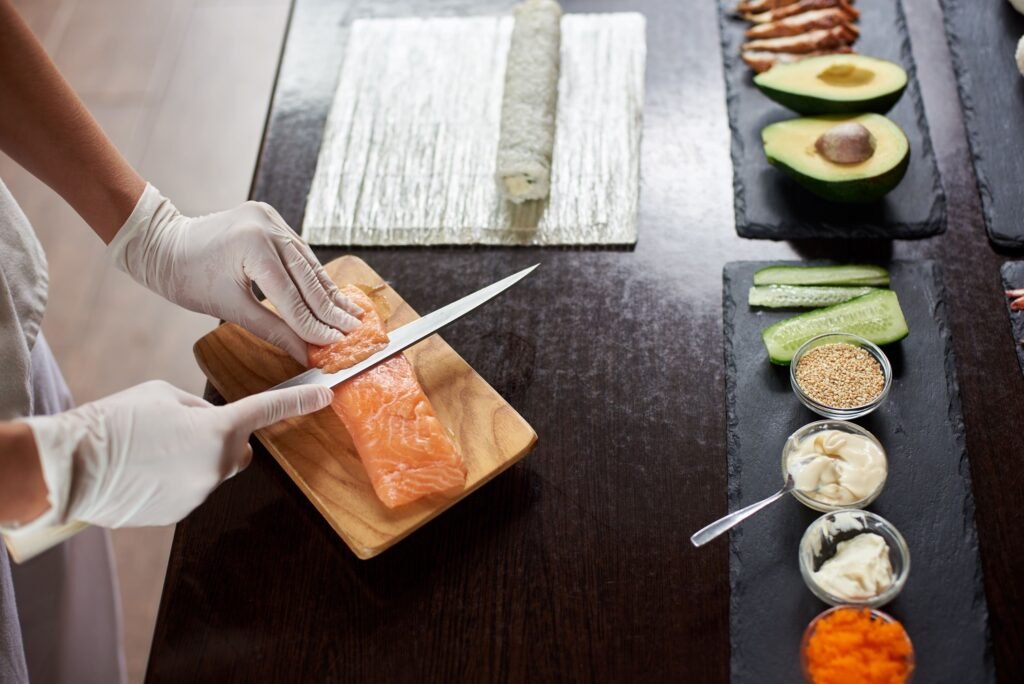
A sashimi knife (yanagiba knife) is a long Japanese knife designed for beautifully slicing sashimi (thin slices of raw fish). Like a deba knife, it features a single-bevel blade and is used to cut filleted fish into sashimi. It is ideal for creating smooth, clean cuts and is widely used in Japanese cuisine for preparing sashimi.
Its long, narrow blade allows for clean slicing in a single pulling motion. As a result, it can be used with minimal force, producing neat slices without crushing the texture of the fish.
Outside Japan, it is sometimes referred to informally as a “sushi knife.”
Difference Between Deba Knife and Sashimi Knife
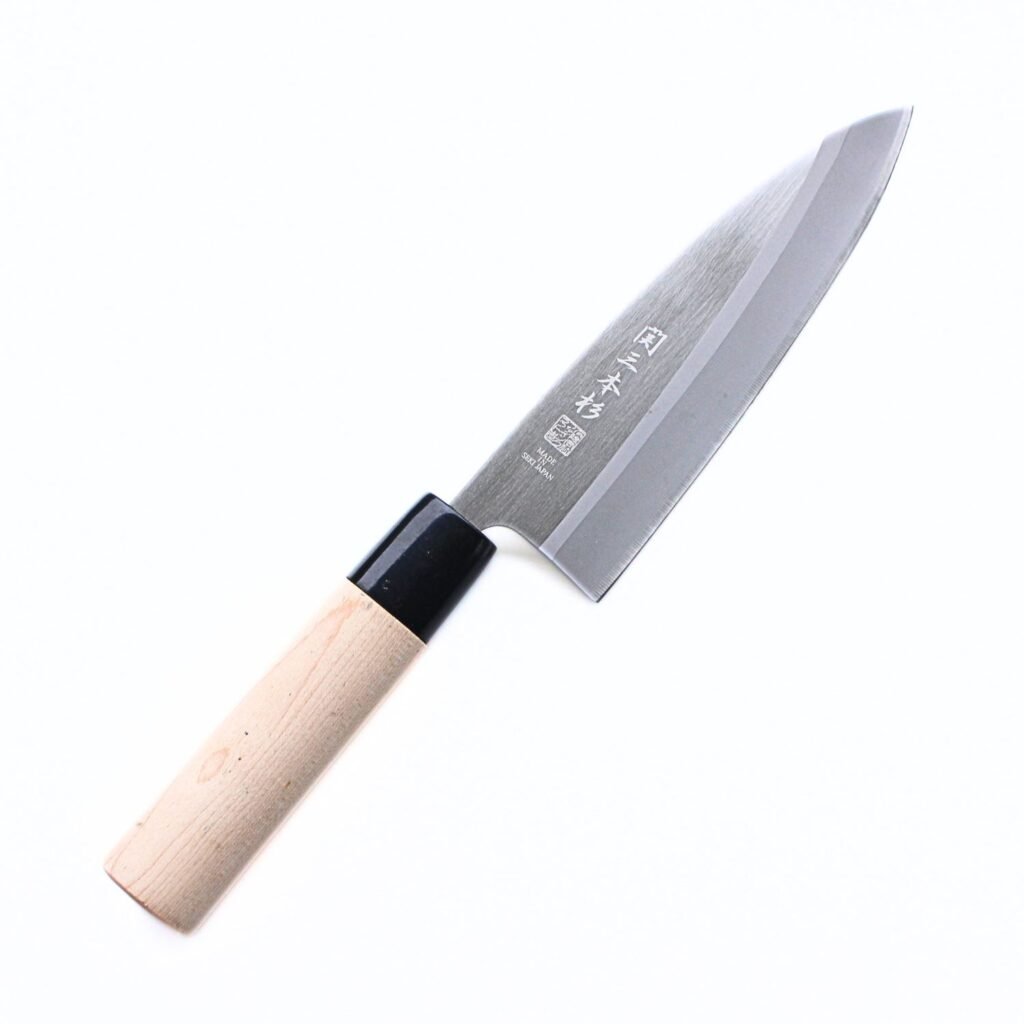
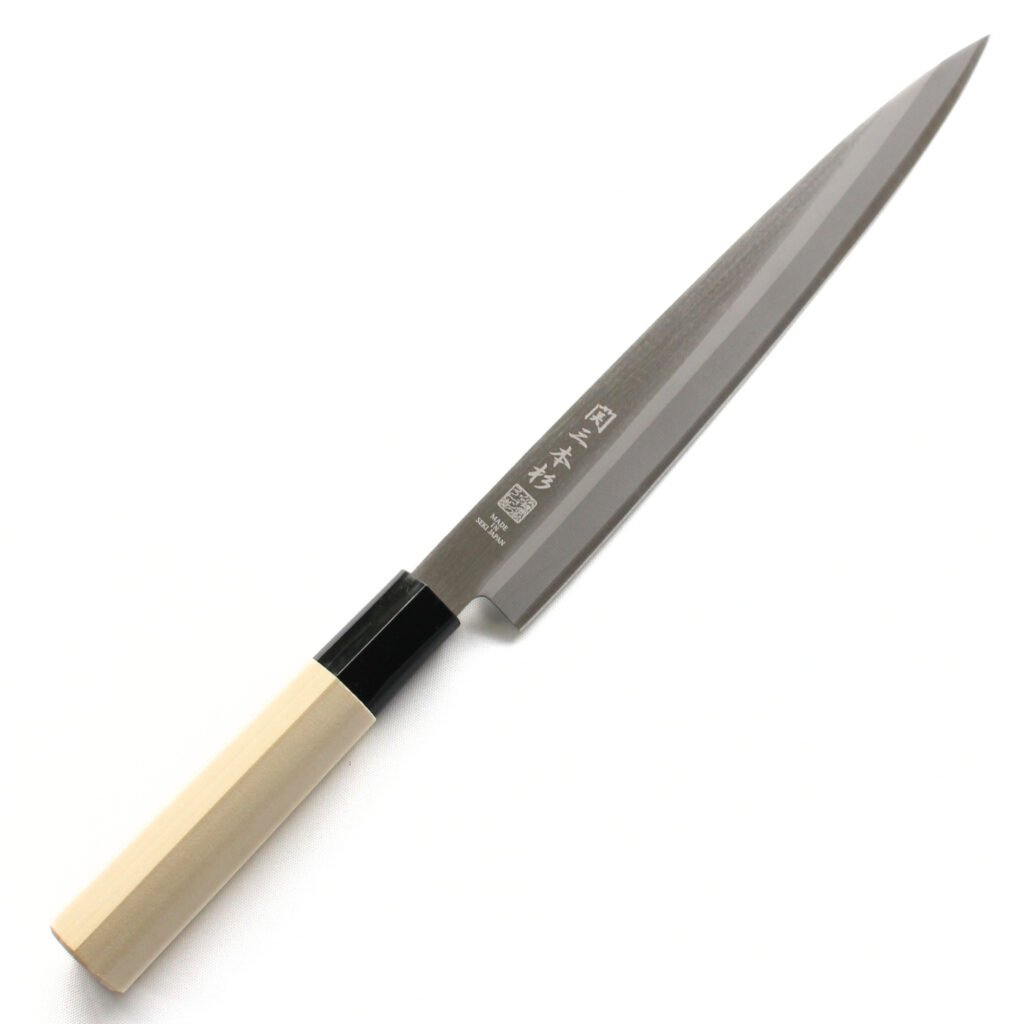
Our Deba knife
We introduced the deba knife, a type of traditional Japanese kitchen knife that is not commonly seen in New Zealand. Japanese kitchen knives have developed to suit specific ingredients and purposes, and they are deeply connected to Japan’s food culture, which focuses on bringing out the natural qualities of ingredients.
In New Zealand households, there may not be many occasions to fillet fish, but for those who enjoy fishing or who purchase whole fish to prepare at home, we highly recommend trying a deba knife.
