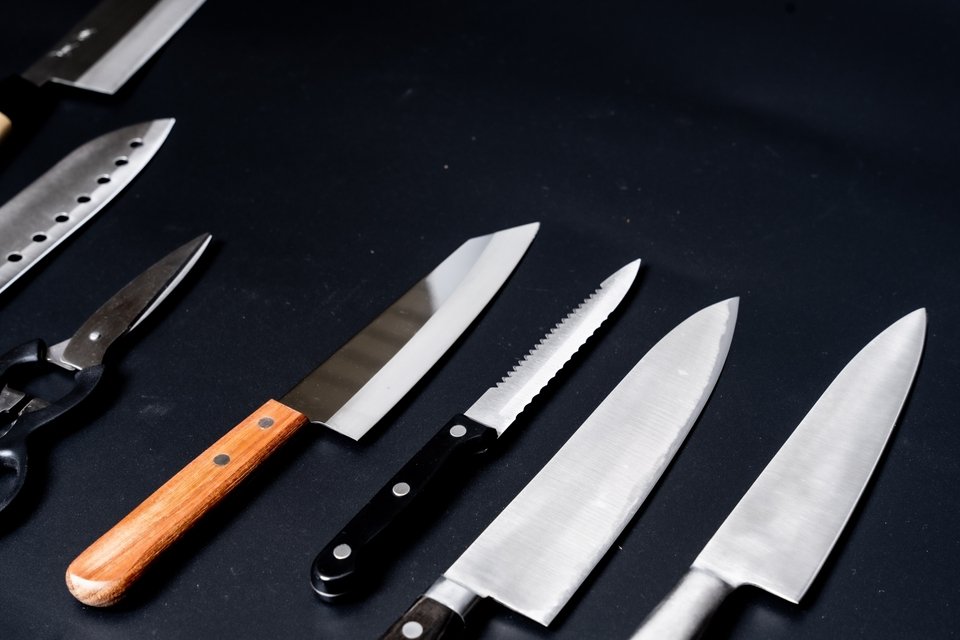
A Guide to Kitchen Knife Materials: Choosing the Right Blade for You
The blades of the knives we use every day come in a variety of materials. For home use, stainless steel is the most common, but other materials such as carbon steel, ceramic, and powder high-speed steel are also widely available on the market. These materials greatly influence the knife’s hardness, wear resistance, toughness, and corrosion resistance, which affect not only usability and lifespan but also sharpness and maintenance requirements. Additionally, even within stainless steel or carbon steel, different grades determine the quality and price, making the selection process enjoyable. Here, we’ll take a closer look at the types of materials used in knives and their unique characteristics. About Carbon Steel (鋼, Hagane) Knives Carbon steel (鋼, Hagane) knives are made from steel, a material created by adding carbon to iron. While pure iron contains impurities that make it prone to rust and brittleness, the addition of carbon enhances its strength and hardness, resulting in steel with excellent cutting ability. This transformation makes carbon steel widely used for knife production. By adding carbon, the steel becomes harder, allowing for a sharp cutting edge that performs exceptionally well. However, the increased hardness also makes the material more brittle and susceptible to rust. For this reason, regular maintenance is essential to keep carbon steel knives in optimal condition. Pros : Cons : In Japan, carbon steel is classified based on its carbon content and other elements, with common types such as Blue Paper Steel (青紙鋼, Aogami Steel), White Paper Steel (白紙鋼, Shirogami Steel), and Yellow Paper Steel (黄紙鋼, Kigami Steel). These steels vary in hardness, durability, ease of sharpening, and rust resistance, and are chosen based on the intended use and personal preferences. Carbon Steel (鋼, Hagane) knives are primarily used in Japanese kitchen knives and are particularly favoured by chefs for sushi, sashimi, and other Japanese dishes where a sharp cutting edge is essential. Carbon Steel (鋼, Hagane) knives are primarily used in Japanese kitchen knives and are particularly favoured by chefs for sushi, sashimi, and other Japanese dishes where a sharp cutting edge is essential. Please note: We currently do not stock carbon steel kitchen knives. About Stainless Steel Knives Stainless steel knives are made from carbon steel that contains chromium (10.5% or more) and has a carbon content of 1.2% or less. The addition of chromium forms a layer of chromium oxide, which prevents rust by binding with oxygen before the oxygen can react with iron. Compared to carbon steel knives, stainless steel knives may be slightly less sharp, but they offer sufficient cutting ability for everyday household use. The main advantage of stainless steel knives is their rust resistance. They are strong against rust, require less maintenance, and are widely used by both professionals and home cooks. Pros : Cons : Browse our Stainless Steel Knives. Stainless Steel Grades and Types Stainless steel comes in various grades, where the chromium content and the addition of other elements can be adjusted to create knives that offer a cutting performance comparable to carbon steel. Common grades found in the Japanese market include Coreless, Ginsan (Silver 3), VG10, AUS10, VG1, and Molybdenum steel, among others. Main Types of Stainless Steel Stainless Steel A standard stainless material that is lightweight, easy to use, and relatively inexpensive. While it offers general cutting performance, its sharpness and durability are slightly inferior to other materials. Molybdenum Vanadium Stainless Steel A stainless steel that includes molybdenum and vanadium. Molybdenum helps the steel maintain its strength and properties even at high temperatures, offering significant benefits even in small amounts. On the other hand, vanadium strengthens the steel and enhances its wear resistance. By adding these elements to stainless steel, weaknesses such as limited strength are reinforced, and wear resistance is significantly improved. Molybdenum Vanadium Stainless Steel offers excellent edge retention, is rust-resistant, and is durable. While it may be slightly harder to sharpen, it requires less frequent sharpening, making maintenance easier. Our popular molybdenum vanadium steel kitchen knife. VG10 (V Gold 10) VG10 (also known as V Gold 10 (“gold” meaning quality)) is a high-quality stainless steel developed by Takefu Special Steel Co., Ltd. It combines the strengths of both carbon steel and stainless steel, making it an excellent choice for knife-making. With a high hardness (HRC 60 or above (For more details, see the explanation below.)), It offers cutting performance similar to that of carbon steel while maintaining the corrosion resistance typical of stainless steel. This allows VG10 to maintain a very sharp edge for an extended period. In Japan, it is highly regarded by both home users and professional chefs. Although VG10 is very hard, making it somewhat challenging to sharpen, it doesn’t require frequent sharpening, making maintenance easier and ensuring long-lasting performance. Our Popular VG10 steel kitchen knife HRC and Knives Hardness HRC, or Rockwell C hardness, is a measure of a knife’s hardness determined using a Rockwell hardness tester. A higher HRC indicates a harder blade that retains sharpness longer, though it may also be more brittle and challenging to handle. Guidelines When choosing a knife, selecting the right hardness based on your intended use is also one of the important factors to consider. About Damascus Steel Knives Damascus steel originally derives from “Wootz steel,” which was made in ancient India. Later, as sword-making became prominent in Damascus, the capital of Syria, it became known as “Damascus steel” after the city. The exact method of producing “Damascus” (or Wootz) steel from ancient India has been lost to history. Therefore, modern Damascus knives are made by layering various steels to recreate the appearance and characteristics of the ancient Wootz steel. Pros : Cons : Browse Damascus Steel Knives. About Powdered High-Speed Steel Knives Powdered high-speed steel (powder metallurgy high-speed steel) is a high-hardness steel made using powder metallurgy, which forms fine and uniform carbide particles. This structure contributes to exceptional cutting performance. The small, evenly distributed carbide particles make the cutting edge sharp, providing excellent cutting ability that lasts longer. The fine carbide particles
A Guide to Kitchen Knife Materials: Choosing the Right Blade for You Read More »