
How to Sharpen a Knife with a Sharpening Stone: A Beginner’s Guide
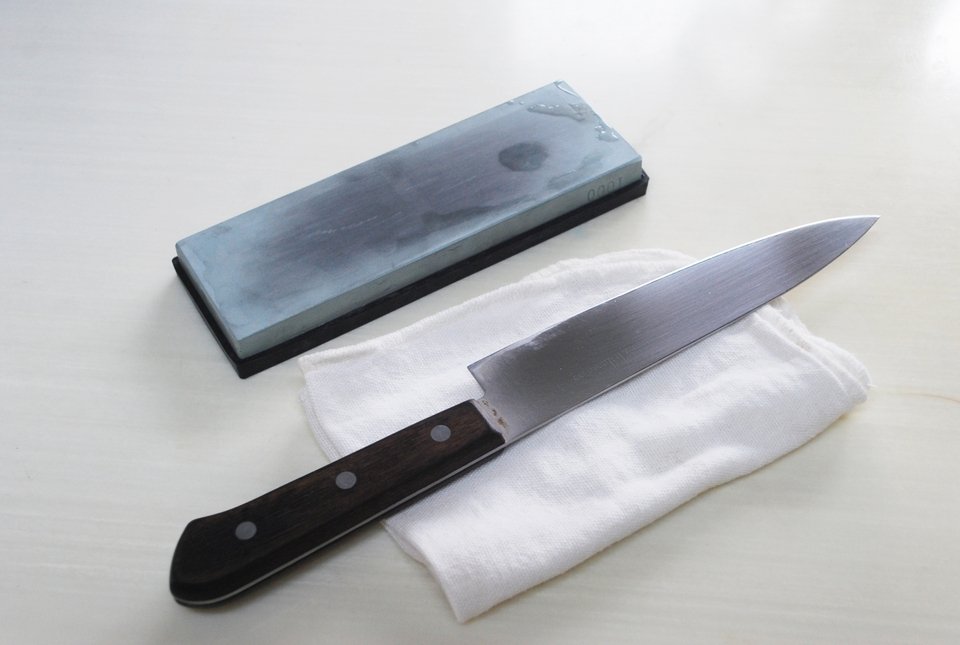
Here in New Zealand, sharpening knives with a honing rod may be the more common method. However, in Japan, using a sharpening stone is the standard practice, with chefs sharpening their steel knives daily with a stone, and it’s also common for households to use sharpening stones for stainless steel knives. Many people may still be unfamiliar with how to use a whetstone to sharpen a knife. Therefore, in this post, we would like to briefly explain the method. Types of Whetstones and How to Choose Them The most commonly used whetstones for knives are artificial whetstones. These are made by binding abrasive materials with a binder and firing them, providing stable grinding power at an affordable price. While natural stones and ceramic whetstones also exist, they are generally not as commonly used due to their high cost. Typically, the grit number is marked on the whetstone package, indicating the size of its particles. The smaller the number, the coarser the grit; the larger the number, the finer the grit. This allows you to choose the right stone for different sharpening needs. When choosing a whetstone, it’s important to match the stone to the condition and use of your knife. For household knife sharpening, a medium grit whetstone is typically enough, but if you want a finer edge, using a fine whetstone will significantly improve the sharpness. How to Sharpen Knives with Whetstones We learnt from an expert in sharpening stones in Japan and actually did the sharpening ourselves. The video is short, but please take a look. Tips for Whetstones: Essential Information to Know How often should a knife be sharpened? The maintenance of knives depends on the type and usage frequency, but it is generally recommended to sharpen them with a whetstone about once a month. How to Maintain Your Sharpening Stone Properly When a sharpening stone is used over time, the center tends to become hollowed out. Sharpening with the stone in this condition can lead to uneven sharpening and cause the blade to lose its shape. Therefore, it is necessary to flatten the stone. You can find flattening stones on the market., and alternatives like concrete or bricks can also be used. What If a Knife Can’t Be Sharpened with a Whetstone? Ceramic knives are a type of pottery and are made from a very hard material, so they cannot be sharpened with regular sharpening stones. Knives That Take a Bit More Effort to Sharpen The ease or difficulty of sharpening with whetstone depends on the hardness of the knife. The hardness of a knife is measured by HRC (Rockwell Hardness), with higher numbers indicating a harder material. Generally, for household knives, a hardness range of HRC 56-58 offers a good balance, making it suitable for everyday cooking. For professional use, knives with HRC 60 or higher are often preferred. A knife with high hardness offers excellent sharpness and maintains its edge for a long time, but due to the harder material, it becomes more difficult to sharpen with a whetstone. However, because it wears down less quickly, it doesn’t need to be sharpened as often. In general, high-hardness knives, once sharpened, retain their sharpness for an extended period. Our Products Currently, we stock medium-grit and finishing whetstones. A knife that is used daily will inevitably lose its sharpness over time. However, by sharpening it at the right intervals, everyday cooking and cutting tasks can become much easier and more efficient. While sharpening with a whetstone may feel like a bit of a hassle, maintaining the blade once or twice a month can greatly improve its sharpness, making the effort worthwhile. Proper maintenance of your knife is an important step in making your cooking more enjoyable. By taking good care of your knives and keeping their edges sharp, handling ingredients will become smoother. This, in turn, will elevate the quality of your cooking and make the process more enjoyable.
How to Sharpen a Knife with a Sharpening Stone: A Beginner’s Guide Read More »
