
Nakiri Knives

What Is a Vegetable Knife? For Clean, Beautiful Cuts Every Time
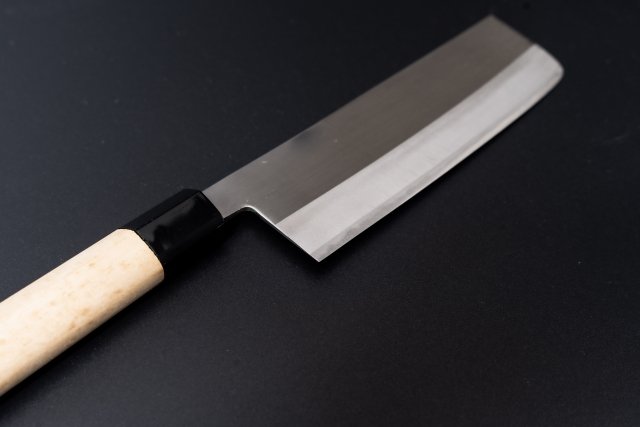
A vegetable Knife – Diagonal Display on Black Background

There are various methods for cutting vegetables, including julienne, slicing, and using tools like knives, slicers, food processors, and peelers. However, cutting vegetables evenly and finely with a knife can be quite challenging. In salads, the cut edges, width, and uniformity play a significant role in the appearance, so many people prefer to cut them as neatly as possible. In this post, we’ll explore the benefits of using a vegetable (nakiri) knife. What is a Vegetable Knife (NAKIRI)? Here in New Zealand, a Vegetable knife (Nakiri) might not be as familiar, but it has been used in Japan for centuries. The word “Na” refers to vegetables, and “Kiri” means “cut,” so it’s called a Nakiri knife in Japan, which specifically refers to a knife for cutting vegetables. This type of knife is closely tied to the Japanese diet, which has traditionally centred around vegetables and fish. The Vegetable knife (Nakiri) is specifically designed for cutting vegetables, and it’s highly recommended for those who want to achieve beautiful, clean cuts when preparing vegetables. Key Features of the Vegetable Knife (Nakiri) Straight Blade and Square Shape Vertical Chopping Motion for Even Cuts Ideal for Dishes Where Appearance Matters Less Suitable for Detailed Tasks Comparing the Shape: Differences Between the Vegetable Knife (Nakiri) and Other Knives Comparison of Blade Sizes and Shapes of Saki Sanbonsugi Knives The Vegetable Knife (Nakiri) The knife has a blade width of 45mm, which is wider compared to other knives, and the width remains almost uniform all the way to the tip.  As a result, the larger contact area with the cutting board allows for even pressure distribution when cutting vegetables, leading to clean and smooth cuts. How Different from All-Purpose (Santoku) and Chef’s Knife (Gyuto)? The All-purpose (Santoku) and Chef’s knife (Gyuto) have gently curved blades, designed as all-purpose knives. This curved blade makes pulling and pushing cuts easier, allowing for smooth cutting of meat and fish. The curve helps the blade slide effortlessly through the fibres of meat and fish, resulting in a tender, clean cut. Additionally, the blade cuts without crushing the fibres, leaving a clean, neat surface. Although both the All-purpose (Santoku) and Chef’s knife (Gyuto) are versatile and can cut vegetables, they are not as efficient with larger, flat vegetables as a Vegetable knife. The curve of the blade makes it difficult for the entire edge to make contact with the vegetable, which may slightly slow down the cutting process compared to a Vegetable knife. Our Vegetable Knife (Nakiri) If you follow a vegetable-centric diet or are particular about the appearance of your vegetable cuts, the Vegetable knife is highly recommended. It ensures delicate and even cuts, enhancing the texture and visual appeal of vegetables. Additionally, for those who want to use specialised knives for different ingredients alongside their current knives, the Vegetable knife is the perfect choice. Having a dedicated vegetable knife, separate from those used for meat or fish, will make your daily cooking more comfortable and enjoyable. Having a variety of vegetables on your table is an important habit that supports the health of you, your family, and your loved ones. To make your daily vegetable dishes even more delicious and enjoyable, the Vegetable Knife is highly recommended.

What Is a Vegetable Knife? For Clean, Beautiful Cuts Every Time Read More »
A Guide to Kitchen Knife Types: Choose the Right One for You

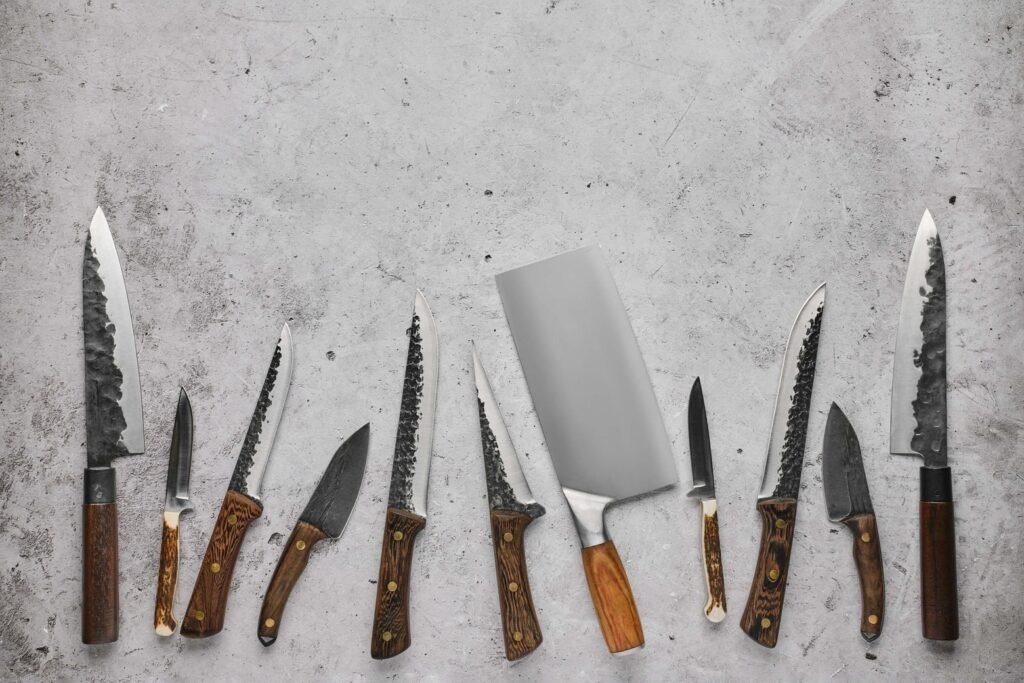
Image of various types of kitchen knives arranged horizontally on a silver background.

A kitchen knife is an essential tool in any kitchen. How many do you own, and are you satisfied with them? In the market, there are many types of knives, each designed for a specific purpose. The most popular include Chef’s knives (Gyuto), All-purpose knives (Santoku), Japanese Deba knives, Sashimi (Sushi) knives, Petty knives, and Bread knives, among others. The material of the knife is also crucial. Stainless steel is the most commonly used material, valued for its rust resistance, though its price can vary widely depending on factors such as the grade of stainless steel, the manufacturing process, and the handle material. There are also carbon steel knives, which, while prone to rusting, offer exceptional sharpness, and Damascus knives, known for their beautiful layered patterns. With so many options available, the market offers a wide range of knives to choose from. Whether you are satisfied with your current knives or are curious about other options, have you ever wondered about the different types of knives out there? In this article, we’ll introduce various types of kitchen knives. Types of Kitchen Knives Western-style knives are versatile and easy to use, with double-edged blades that excel at making straight cuts, making them ideal for slicing meat and vegetables. They are commonly used in households and among chefs in New Zealand, and there are various types to choose from. Here are some common types of kitchen knives along with their key features. Chef’s Knife (Gyuto) A Chef’s knife is a versatile double-edged knife. The knife is not only ideal for cutting meat but also excellent for slicing vegetables, fish, and more. With its pointed tip, it is particularly suited for tasks like portioning meat on a cutting board. This knife is one of the most popular choices in New Zealand. The knife is also commonly referred to as a “Gyuto.” In Japan, during a time when there was no custom of eating beef (gyu niku in Japanese) Western-style knives used for butchering cattle were introduced to the country. These knives came to be known as “Gyuto knives”. View our range of Chef’s knives. All-Purpose Knife (Santoku) An All-purpose Purpose knife is a versatile double-edged knife that combines elements of both Western and Japanese knife styles. Similar to a Chef’s knife, it excels at cutting meat, fish, vegetables, and more, making it a highly practical tool in the kitchen. The knife is also called “Santoku” which means “three virtues” or “three uses,” referring to its ability to handle meat, fish, and vegetables. Typically, the All-purpose knife has a blade length of 165-180mm, and its rounded tip makes slicing vegetables easier than the more pointed Chef’s knife. The Santoku is one of the most popular household knives in Japan. View our range of All-Purpose knives.. Petty Knife A Petty knife is a small, versatile, double-edged knife, typically used for detailed tasks like peeling, trimming, and cutting fruits, vegetables, and other ingredients, making it an excellent supplementary knife in the kitchen. View our petty knife. Paring knife A Paring knife is a small knife with a short blade, typically 7.5 to 10 cm long, and a pointed tip. It is ideal for precise, detailed tasks, such as peeling, coring, trimming, and other intricate cutting jobs that require precision. Cleaver knife A Cleaver knife is a large, thick-bladed knife designed for cutting through bone-in meat and tough ingredients. Bread knife There are two types of bread knives: the serrated type and the straight straight-edgedge type. The serrated type features a jagged blade, making it ideal for cutting any type of bread, from soft to hard, without crushing it. The straight edge type, with its straight blade, is better suited for cutting soft bread or delicate items like sponge cakes, where a gentler touch is needed to avoid crushing. Exploring Traditional Japanese Knives Japanese knives (wa-bochou) are traditional knives from Japan, most of which are single-beveled (with the edge on only one side). This design provides an exceptionally sharp edge and allows for precise cutting, ensuring that the fibres of the ingredients are not damaged, making them ideal for the delicate cutting required in Japanese cuisine. Sashimi (Yanagiba) knife A Sashimi knife is characterised by its long, slender blade and is typically single-beveled, making it ideal for slicing fish to create beautifully sliced sashimi (raw fish slices). The single bevel provides an exceptionally sharp edge, allowing for smooth cuts without crushing the fish, resulting in clean and vibrant slices. View our Sashimi knife. Vegetable (Nakiri) knife A vegetable knife (Nakiri) is a double-edged knife that is ideal for making straight cuts through vegetables. It is used for tasks such as trimming the edges, chopping, and finely slicing vegetables. View our Vegetable knife (Nakiri). Deba knife A Deba knife is a single-beveled knife used for filleting and butchering fish. It is a uniquely Japanese knife, developed in a culture that has long included fish in its diet. The back of the blade is thickened to help cut through the hard bones of fish. Elevate Your Cooking with Proper Knife Selection By using different types of knives suited to various ingredients, I believe you can enhance both the results and enjoyment of your cooking. If you’re unsure about which knife to choose, a Chef knife (Gyuto) or All-Purpose (Santoku) knife can cover a wide range of ingredients, such as meat, vegetables, and fish. Each knife is designed with a specific shape, length, and edge suited to particular tasks. Understanding the characteristics of knives and choosing the right one is key. In addition to your essential knife, using different knives for different ingredients can elevate your cooking and make the time spent in the kitchen more enjoyable. Be sure to find the knife that best suits your needs.

A Guide to Kitchen Knife Types: Choose the Right One for You Read More »

Scroll to Top